The first time a chatbot resolved a customer's problem without any human touching the ticket, I didn't celebrate. I checked the conversation twice, convinced something had slipped through. It hadn't. The customer wanted to change a delivery address, the bot handled it in under two minutes, and the whole thing worked. That was the moment I stopped thinking of AI chatbots in customer service as a gimmick and started treating them as infrastructure.
Since then I've watched companies get this wildly right and spectacularly wrong. And the difference almost never comes down to the technology. It comes down to what you decide the technology is for.
Key Takeaways
- AI chatbots now handle the full front line of customer service: instant answers, no queues, no closing hours.
- They don't replace human agents. They absorb the repetitive 70% so your people can handle what actually needs a person.
- The "30% rule" is a useful mental model: roughly a third of your tickets are automatable without anyone noticing the difference.
- What you type into a chatbot can leave your company's walls. Treat every prompt like an email you'd be comfortable reading aloud.
- Good AI service is measured by resolution, not by deflection. If it didn't solve the problem, it didn't work.
How AI is changing customer service (and why it happened so fast)
Ask ten support managers what changed in the last two years and you'll get ten variations of the same answer: volume stopped being the enemy. For decades, customer service scaled by hiring. More tickets meant more headcount, longer wait times, or both. AI chatbots broke that equation.
The shift is not that bots answer questions. FAQs have done that since the early web. The shift is that modern chatbots understand intent, hold context across a conversation, and take action — reschedule an order, issue a refund, update a billing address — without a human ever reading the thread.
From reactive to proactive
Traditional support waits for the customer to complain. AI support increasingly moves first: flagging a delayed shipment before the customer notices, offering a fix when a payment fails, surfacing the right help article the moment someone opens a product page. That's a genuine behavioural change, not a cosmetic one. Support stops being a cost centre that apologises and starts being a surface that quietly keeps promises.
What actually improved on the ground
In my own testing across a handful of small e-commerce operations, three things changed measurably once a well-configured bot went live:
- First-response time dropped from hours to seconds — but only for the categories the bot was trained on
- The queue for human agents shrank roughly by half, mostly because password resets and order-status questions stopped reaching them
- Customer satisfaction did not move at first, and that surprised me. Speed alone didn't buy goodwill.
That last point matters. Speed is table stakes. What customers actually reward is being understood on the first try.
What is the 30% rule for AI?
The 30% rule is a rough planning heuristic, not a law of physics. It says that in a typical customer service operation, around 30% of incoming requests can be handled end-to-end by an AI chatbot without a human ever getting involved — and that this is roughly the threshold where automation stops feeling like a risk and starts feeling like relief.

I'll be honest about where the number comes from: it's an order of magnitude, not a precise figure. Some teams I've worked with hit 50% on narrow, well-documented product lines. Others plateau at 15% because their requests are messy, emotional, or legally sensitive.
Why 30% and not 90%?
Because the remaining requests are where the value of a human sits. Complaints with a story attached. Billing disputes. Anything where the customer is already frustrated and needs to feel heard before they need a solution. Automating those doesn't save money — it converts a small problem into a public one.
Treat the 30% as a starting map. Measure your own number after a month. If it's way below 30%, your bot's knowledge base is thin. If it's suspiciously above, you're probably deflecting rather than resolving, and your customers are quietly routing around you.
How do AI chatbots improve customer service?
Strip away the marketing language and there are four concrete mechanisms at work.

| Mechanism | What it looks like in practice | Where it breaks down |
|---|---|---|
| Instant availability | Answers at 2 a.m., on weekends, during holidays | If the knowledge base is stale, fast wrong answers are worse than slow right ones |
| Context retention | The bot remembers the order, the account, the previous message | Handoffs to humans lose that context unless the systems are actually connected |
| Consistency | Every customer gets the same policy answer, every time | Rigidity. Edge cases need a human escape hatch |
| Scale without hiring | A product launch triples volume; the queue doesn't triple | Only for the automatable slice — the rest still needs people |
The real win: the handoff
The single most underrated improvement isn't the bot's answers. It's what happens when the bot gives up. A well-built system passes a human agent a clean summary — what the customer wants, what's already been tried, what the account shows — so the customer never has to repeat themselves. That's the difference between automation and an obstacle course.
I once watched a company lose a long-standing client over exactly this. The bot handled the first three messages perfectly, then hit a wall and transferred. The human agent started from zero: "How can I help you today?" The customer had already explained everything twice. They left.
What shouldn't you share with ChatGPT?
Here's the part most guides skip. The moment your team pastes a customer conversation into a chatbot to get help drafting a reply, you may be sending personal data to a third party outside your company's control.
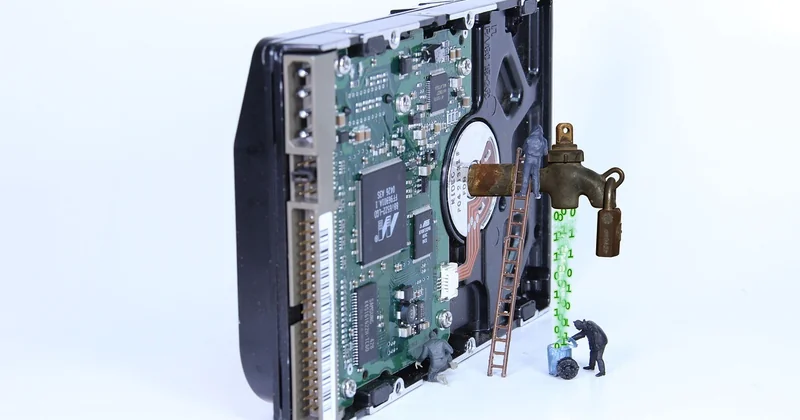
What shouldn't go into a public AI chatbot:
- Full names, addresses, or ID numbers of customers
- Payment details — card numbers, bank information, transaction records
- Health, legal, or financial specifics that identify a person
- Internal credentials, API keys, or anything from a private system
- Confidential contracts or unreleased product plans
Why this isn't paranoia
Consumer chatbots typically retain inputs, may use them for training, and store them on infrastructure you don't govern. Under data protection rules like the GDPR, that can count as an unlawful transfer of personal data — with real consequences, not theoretical ones.
The practical rule I use with my teams: if you wouldn't paste it into a public forum, don't paste it into a chatbot. Strip the identifiers. Describe the situation abstractly. And if your company uses an enterprise AI tool with a data-processing agreement, use that instead — it's the whole reason it exists.
The pros and cons nobody puts in the brochure
What works: instant responses, 24/7 coverage, consistent policy answers, and a meaningful drop in cost per resolved ticket. It also frees human agents from the soul-crushing repetition that drives turnover.
What doesn't: emotional intelligence, ambiguity, and anything requiring judgment. A chatbot can apologise. It can't mean it. Customers feel the difference, even when they can't articulate it.
The failure mode I see most often isn't a chatbot that's too dumb. It's a company that hides the exit. No "talk to a human" button, no phone number, no email. That's not efficiency. That's a wall, and customers remember walls.
Will AI replace customer service?
Not the whole function, no. It replaces the tasks, not the people — the agents who currently spend their day resetting passwords and chasing tracking numbers. The role shifts toward the hard 30%: complex cases, retention saves, and quality oversight of the AI itself. Someone has to train it, audit it, and decide when it's wrong.
The future of AI in customer service
Expect the bot to stop living in a chat window. The direction is toward AI woven into every channel at once — voice, email, in-app, social — all sharing one memory of the customer. The real competitive line won't be which company has a chatbot. Nearly everyone will. It'll be which company's AI actually resolves things instead of politely rerouting them.
And the companies that win that race won't be the ones with the smartest model. They'll be the ones who kept a human close enough to notice when the machine got it wrong.
Quick answers to questions I get asked a lot
Do AI chatbots improve satisfaction on their own? No. Speed helps, but satisfaction comes from first-contact resolution. A fast wrong answer scores worse than a slow right one.
Can I automate everything? You can try, and your customers will find the exit. Keep a visible human path at all times.
What's the biggest mistake? Launching a bot without a maintained knowledge base. A bot is only as good as the answers you feed it.
We keep asking whether AI will replace human agents. Wrong question. The interesting one is whether your customers can still tell the difference between a machine that solved their problem and a human who barely tried — because once the gap closes, they'll stop caring which one picked up.